NIKKI JEFFORDS

SHARE ON SOCIAL /


PIVOTAL MOMENT
Foundational quote for image generation:
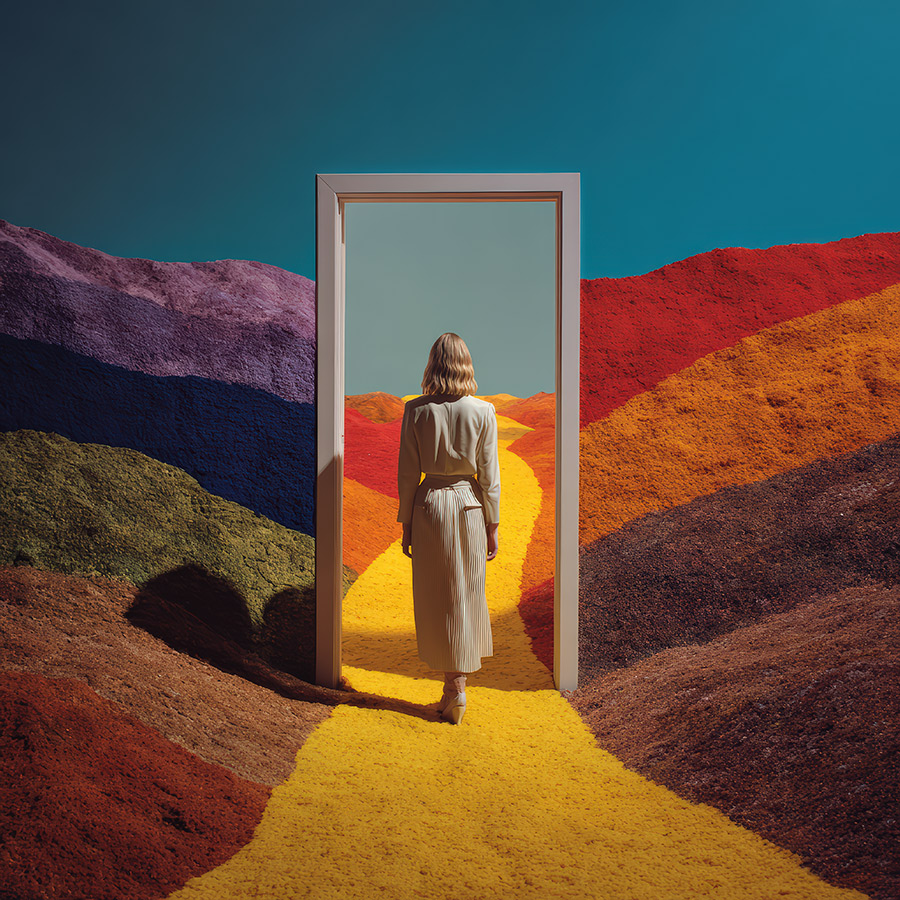
“I was working in an office and a woman said to me, we need to have a chat, can you please sit down? And she was a blind woman, and she said, Nikki, you need to know that blindness is respectable. That was a profound statement, and it altered my life in a huge way. It helped me to realize that I did have worth. I didn’t have to be embarrassed anymore. It was a pivotal time in my life. And I think that’s when my life started moving forward.“
This image shows a woman facing away from the viewer, walking through a freestanding doorway set in the middle of a surreal, vividly colored landscape. Around her, the land rises in soft, textured bands of deep blue, purple, olive, rust, orange, and red under a clear teal sky. The door, placed alone in this open landscape, becomes symbolic, less an object than a threshold. The composition feels calm, deliberate, and full of forward motion.
What makes the image so resonant for your quote is the way it turns an internal shift into something spatial and visible. The doorway stands for that pivotal conversation, where you heard, “blindness is respectable”. The image presents your journey as one of recognition and release, a passage into a fuller, more confident sense of self.
THE UNSEEN IMPACT
Foundational quote for image generation:
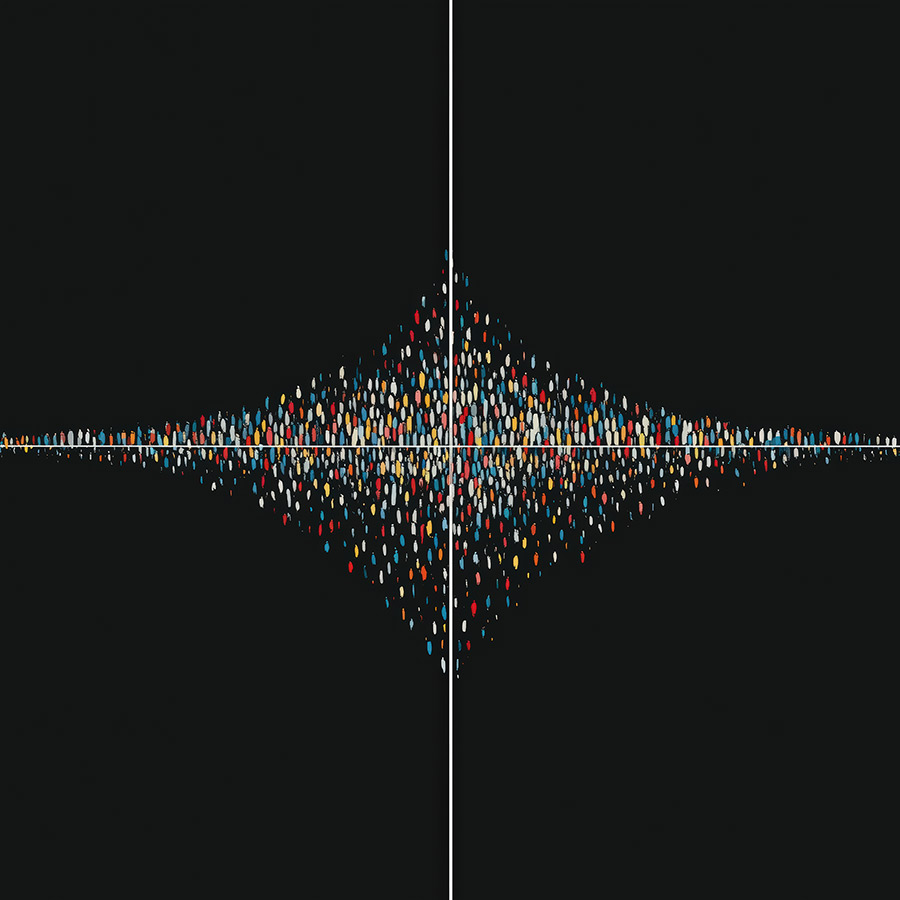
“If you can take away some of the pain that comes with the loss of vision, then that’s a beautiful thing. Because vision loss is painful from not just a physiological perspective, but from a psychological perspective as well. I applaud any efforts. Researchers and scientists and ophthalmologists may not think that moving that needle — just a little bit — to give a little bit more vision is maybe not a big deal. But it is a big deal. It is a big deal.“
This image features a clean, black background, with hundreds of brilliantly colored oval marks clustered around a central axis of white lines. These elements work harmoniously to form both an abstract, symbolic pattern-like chart. Around that central point, the colored marks, in white, pale blue, yellow, orange, and red, become densest near the middle and gradually thin out toward the edges.
There is something very simple and bold about the symbolism here. On one level, it evokes the language of vision science, measurement, fields of vision, etc. But it does not feel cold. The concentration of marks at the center, and the way they thin into darkness, suggests the fragile and uneven nature of sight itself, how vision can narrow, scatter, and diminish.
That is where the image begins to connect to your deeper point, that vision loss is not only physiological, but psychological. It feels like a map of the visible and invisible, of what can be measured clinically and what is felt internally. Even a small shift, even a few more points of light, would matter. In that sense, the image becomes a visual argument for why small gains in vision are not small at all, but deeply meaningful in a person’s life.
FELLOWSHIP
Foundational quote for image generation:
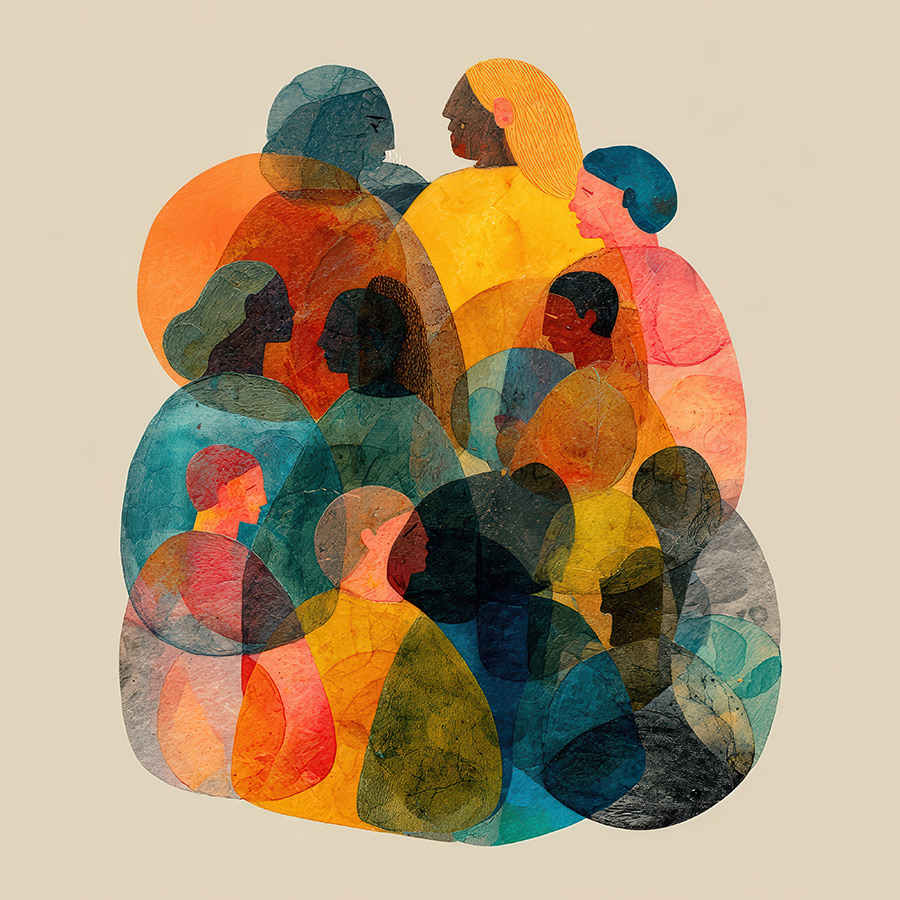
“I feel like there is a sacred brotherhood sisterhood in the blind community, having people that I can commiserate with. Because blindness itself is usually not the problem. The problem is the attitudes of people that I encounter. And in the world not being truly accessible. Getting from point A to point B or dealing with somebody’s attitude. So having that fellowship is really important to me.“
This image is an abstract gathering of overlapping human figures, rendered in translucent layers of color. There is no traditional background, just a soft neutral field that allows the figures themselves to become the entire environment. The figures are simplified and stylized, built from rounded shapes and curved silhouettes rather than detailed anatomy. The palette moves through deep blues, teals, amber, ochre, coral, rose, black, and smoky gray. Because the shapes are semi-transparent, colors blend where figures overlap, creating a sense of layering, closeness, and shared presence.
This image brings the quote to life in that it shows fellowship as mutual presence and recognition. That feels especially true to your words about the blind community being a brotherhood and sisterhood, a space where people do not need to explain themselves in the same way because others already understand the texture of that experience. The image becomes a portrait of solidarity, refuge, and emotional recognition.
ABOUT NIKKI
NIKKI JEFFORDS / CONGENITAL GLAUCOMA
Blindness Advocate / Vocational Rehabilitation Specialist
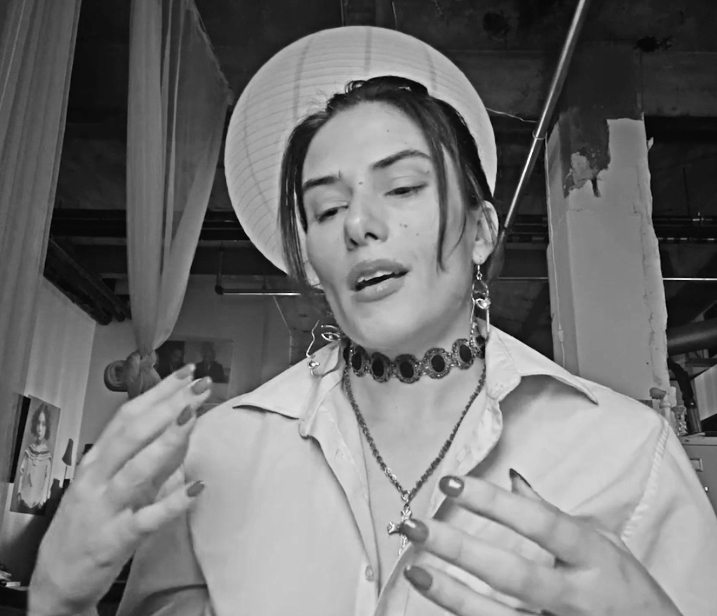
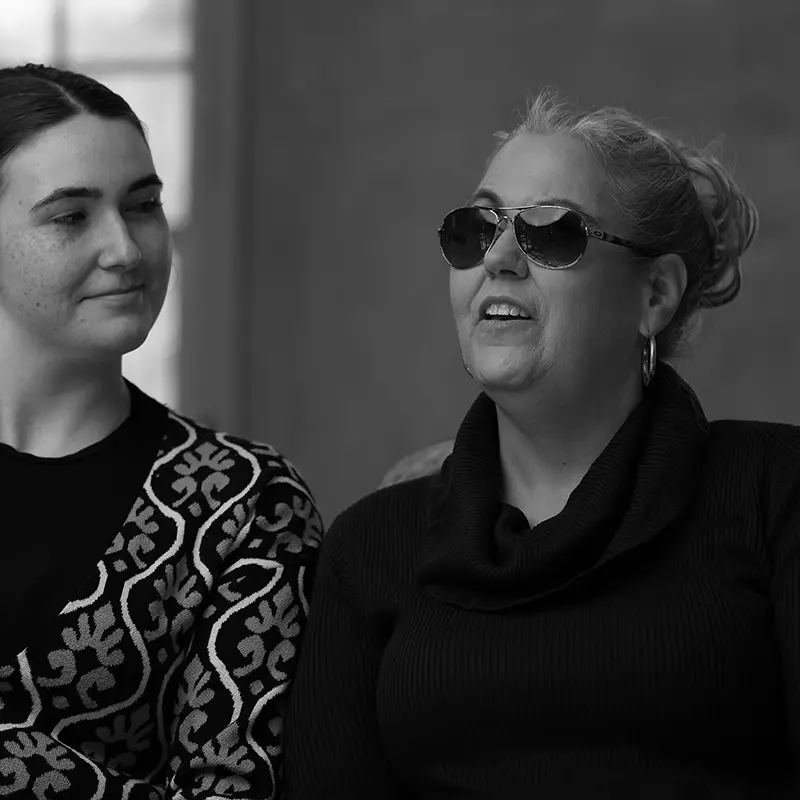
Nikki Jeffords has devoted her career to the blindness community, and her impact can be felt from the grassroots to the highest levels of government. Currently serving in a senior role at the U.S. Department of Education, Nikki brings decades of dedication and expertise to shaping policy that affects the lives of blind and visually impaired Americans nationwide. A gifted organizer and connector, she has a talent for bringing people together — whether through large-scale events for the blindness community or the quiet, consistent advocacy she’s built her reputation on. A passionate traveler with a hunger for new experiences, Nikki also finds her deepest joy at home — as the proud mother of twin daughters who are now making their own mark in college.
ARTISTS