DEBORAH TRAMENTOZZI

SHARE ON SOCIAL /


ART RAISED ME UP
Foundational quote for image generation:
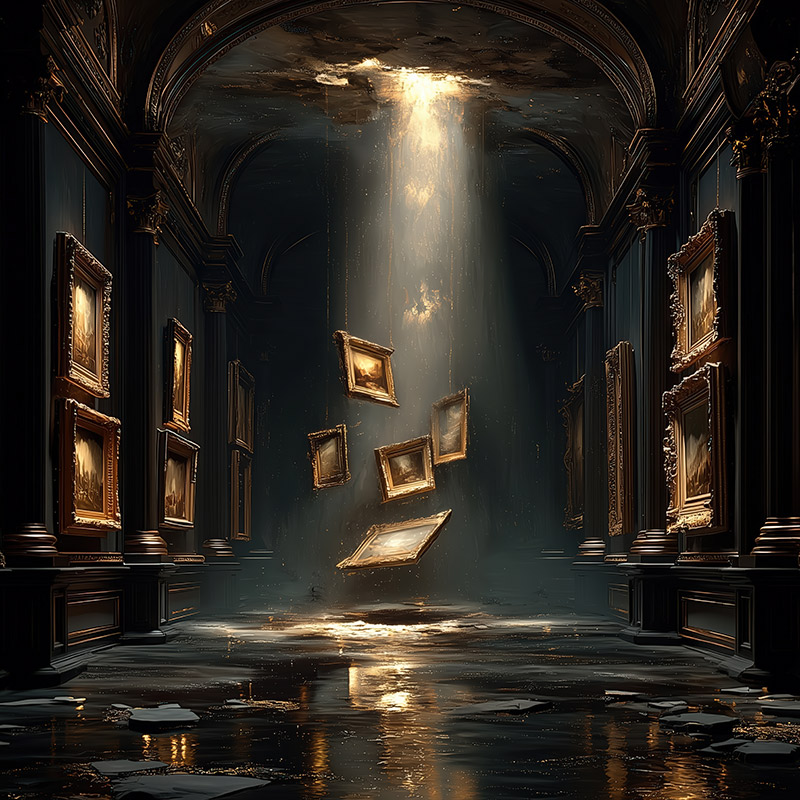
“Art is my passion. It raised me up from the darkest period of my life. I went to a museum, and my instructor invited me to touch an accessible reproduction of The Deposition by Caravaggio. And when I felt the artwork, I started crying. I found myself on that painting. And I understood that, to live — to breathe again — I needed to stay close to art for the rest of my life.“
This image shows a dark, grand museum hall with paintings lining both walls. The space is filled with deep shadows, tall architecture, and a strong beam of light descending from above. Several framed works appear to float upward through the light, as if they are being lifted out of the darkness. The floor reflects the glow, adding to the feeling that the room has become sacred or dreamlike.
The lighting is dramatic, with deep shadow and bright illumination recalling the chiaroscuro of Caravaggio. The contrast between darkness and light is central to the image. The museum does not feel like a normal public space. It feels like a place of revelation. The paintings are not simply hanging on walls. They appear alive, moving, and touched by light.
The image reflects Deborah’s quote about art raising her from the darkest period of her life. Her experience with the accessible reproduction of Caravaggio’s The Deposition was not just emotional. It helped her reconnect with life itself. The floating frames suggest that art has the power to lift, heal, and restore. The beam of light becomes a symbol of renewal, while the surrounding darkness acknowledges the pain she had been living through. The piece presents art as a force that helps someone breathe again.
A DIFFERENT WAY TO SEE
Foundational quote for image generation:
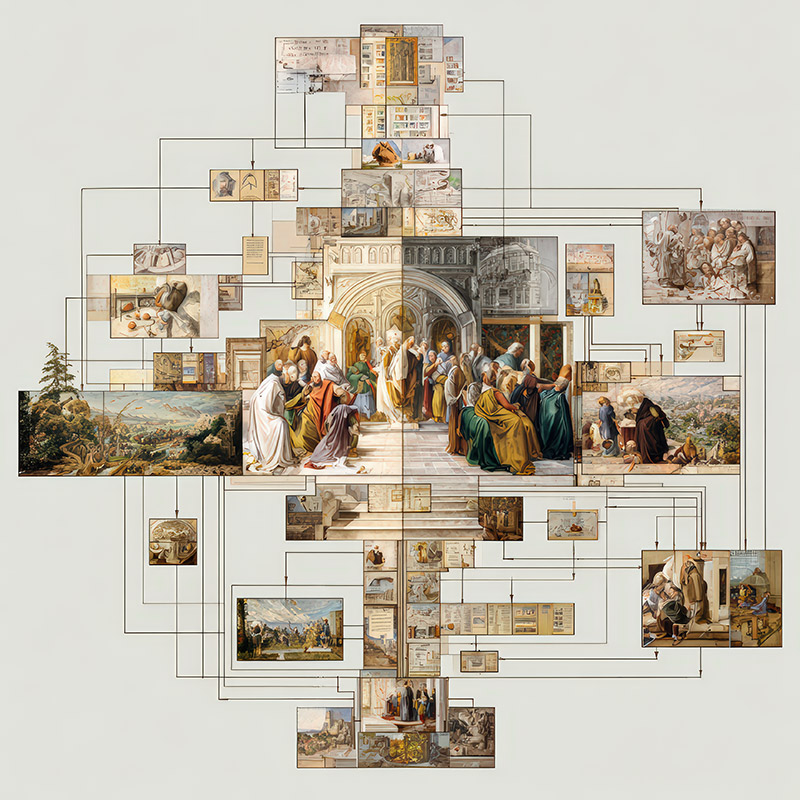
“I think that every sighted person should learn to see how the blind see, because blindness is a different way to look at life. The sighted person sees in a panoramic way, in a synthetic way. A blind person sees in an analytic way. And I think that analyzing every part of our perspective, of our thinking, is the key to understanding how we really are.”
This image is built from many smaller visual fragments arranged across a pale background. The fragments include paintings, sketches, architectural details, pages, and art historical references. Thin lines connect the pieces into a wide network. At the center is a larger classical scene, while smaller images extend outward above, below, and to both sides.
The image feels analytical and carefully organized. It does not present one simple view. Instead, it shows many parts being connected into a larger whole. Each fragment seems to have its own meaning, but the lines between them suggest that understanding comes from relationship, structure, and attention. The viewer’s eye moves from detail to detail, building meaning gradually.
The image connects to Deborah’s idea that blindness can offer a different way to look at life. She contrasts the panoramic way a sighted person may see with the analytic way a blind person may perceive. This image gives form to that idea. It suggests that seeing is not only about taking in everything at once. It can also be about touching, analyzing, connecting, remembering, and interpreting. The piece honors Deborah’s belief that perception is not limited to the eyes. It is also intellectual, emotional, and deeply human.
LIVE THE BEAUTY
Foundational quote for image generation:
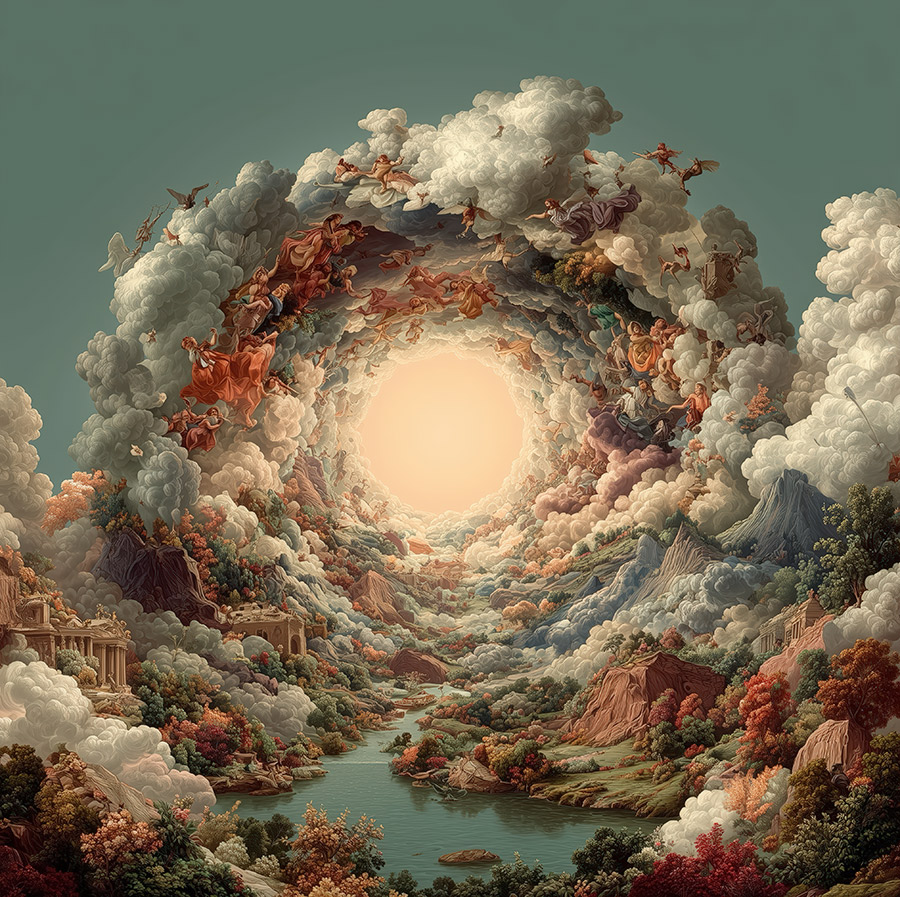
“I can’t see a place on a postcard. To see a place I have to live it.
I need to live the beauty. And so, I started to think that in my life,
I would like to be surrounded by art, by music … by things that are beautiful.”
This image shows a vast, dreamlike landscape filled with clouds, water, trees, ruins, soft light, and distant hills. The clouds rise and curve around the scene on a grand, almost Baroque scale. At the center is a bright opening of light, like a sun or heavenly portal. Around it, the landscape appears to unfold in layers of movement, atmosphere, and wonder.
The scene feels expansive and immersive, as if it is not just a place to look at, but a world to enter. The clouds have the scale and drama of a Baroque ceiling painting, full of motion and grandeur. The water, trees, flowers, ruins, and soft light create a feeling of all life’s beauty gathered into one dreamlike space. It feels less like a postcard and more like a heaven made from art, nature, music, and memory.
The image reflects Deborah’s quote that she cannot see a place on a postcard, she has to live it. The piece does not present beauty as a flat image to observe from far away. It imagines beauty as an environment, something surrounding the body and spirit. It connects to her desire to live close to art, music, and beautiful things. The image suggests that beauty is not decoration. It is a way of being in the world.
ABOUT DEBORAH
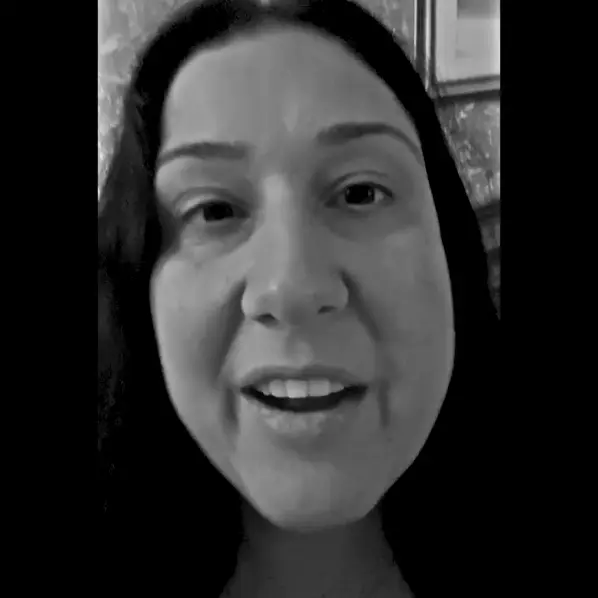
DEBORAH TRAMENTOZZI / BLIND SINCE BIRTH
Accessibility Advocate / Tactile Art Expert / Scholar
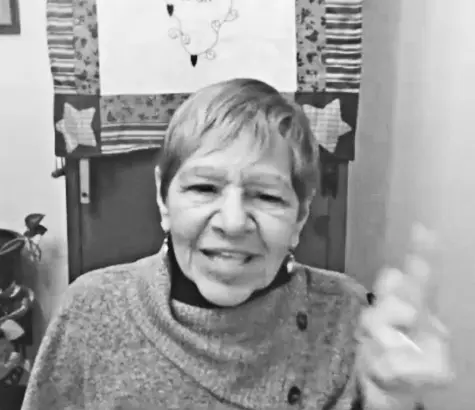
Deborah Tramentozzi is an Italian accessibility advocate, tactile art expert, and scholar whose work explores how art can be experienced beyond sight. Blind since birth, she has dedicated much of her life to expanding access to culture for blind and visually impaired audiences, bringing together lived experience, deep curiosity, and a profound love of art in all its forms. Her work has included collaboration with the Vatican Museums on accessibility for blind visitors, and she has also contributed to Tooteko, a project that blends touch and sound to create more independent, multisensory encounters with art. She studied classical literature at Sapienza University in Rome, and her perspective reflects both an intellectual and deeply personal belief that beauty, meaning, and human expression should be open to everyone.
ARTISTS