SOPHIA DUNN-WALKER

SHARE ON SOCIAL /


STRENGTHS & LIMITATIONS
Foundational quote for image generation:
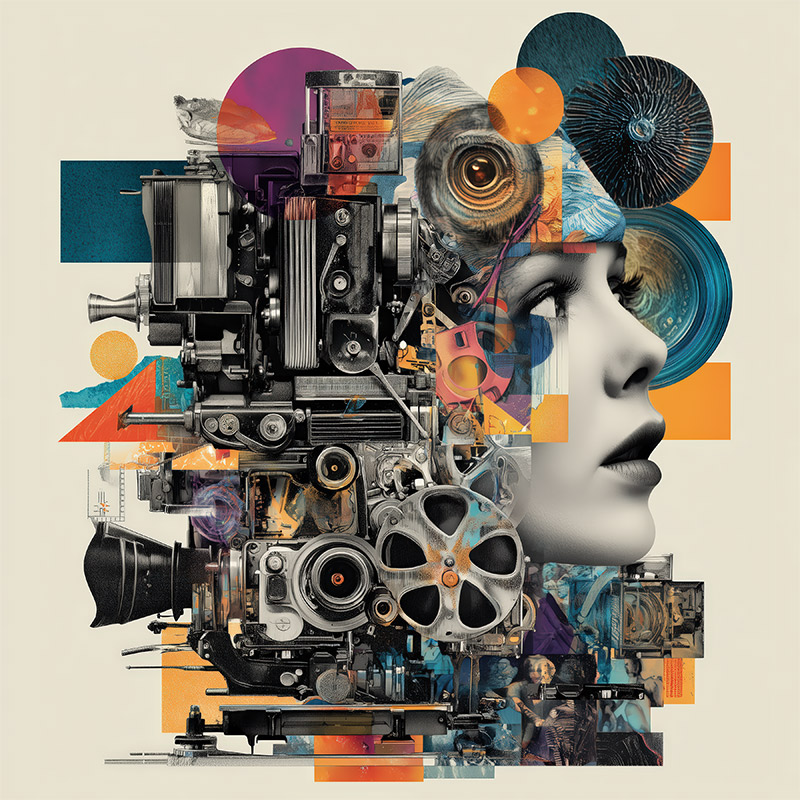
“Having a visual impairment and working in a medium that’s highly visual, you have to rely on your key collaborators — finding people I really trust, who understand both my strengths and limitations. Having a really good cinematographer who understands what I want to get across has been essential. So, it really boils down to communication. I think that anyone who’s different can contribute a lot to a creative field, and a good leader knows how to incorporate that person.“
This image shows a woman’s face in profile, looking toward the right side of the composition. Her face is calm, almost sculptural, while the left side of the image is built from a dense collage of film equipment, camera lenses, reels, mechanical parts, and layered visual forms. Bright blocks of orange, teal, purple, and blue move through the composition, mixing with the black-and-white machinery and the soft human profile.
The image feels like a portrait of creativity built through collaboration. The woman’s face remains clear and focused, while the tools of filmmaking surround and intersect with her. The camera equipment represents the highly visual medium Sophia works in, and the layered forms suggest the many people, skills, and systems that help bring a creative vision to life. The image reflects the balance in her quote between strengths and limitations. It shows that making visual work while visually impaired is not about working alone or hiding what is difficult. It is about communication, trust, and surrounding yourself with collaborators who understand both what you can bring and what support you need. The piece presents collaboration not as a compromise, but as part of the creative process itself.
WHAT PEOPLE NEED & WHERE PEOPLE ARE
Foundational quote for image generation:
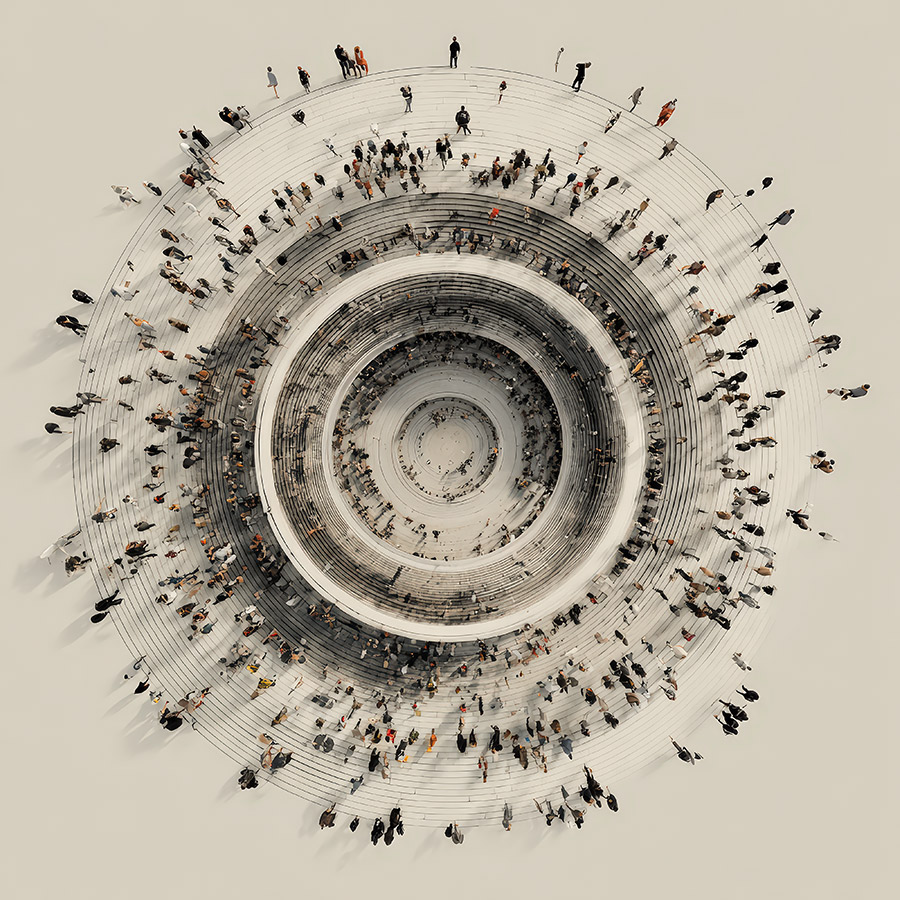
“My main message would be to let the individual tell you what they need and let them tell you what their condition is like. And I could take my own advice, honestly. I really try to see people on an individual basis, because there’s such a range in what people need and where people are.”
This image shows an aerial view of a monumental, layered circular structure. The form descends inward in wide rings, almost like a vast amphitheater, gathering place, or civic space seen from above. Each level is filled with people. Some figures stand alone, others move in small groups, and many gather along the curved pathways at different heights within the structure. The composition creates a strong ringed pattern, with layers of movement, community, and distance all organized around the center.
The scale gives the image a sense of complexity and humanity. There are many people here, but they are not all in the same place or moving in the same way. Some are close to the center, others remain near the edges. Some appear to be crossing between levels, while others pause within their own space. The structure suggests a world with many different needs, positions, and ways of moving through it.
The image reflects Sophia’s message about letting each individual tell you what they need and where they are. Rather than presenting one single version of disability or one universal kind of support, the piece shows a layered human environment filled with different people, different paths, and different vantage points. It suggests that empathy begins by paying attention to the person in front of you, not by making assumptions. The image captures the importance of meeting people individually, listening first, and understanding that real support has to be shaped around what people actually need and where they actually are.
FULL IMMERSION
Foundational quote for image generation:
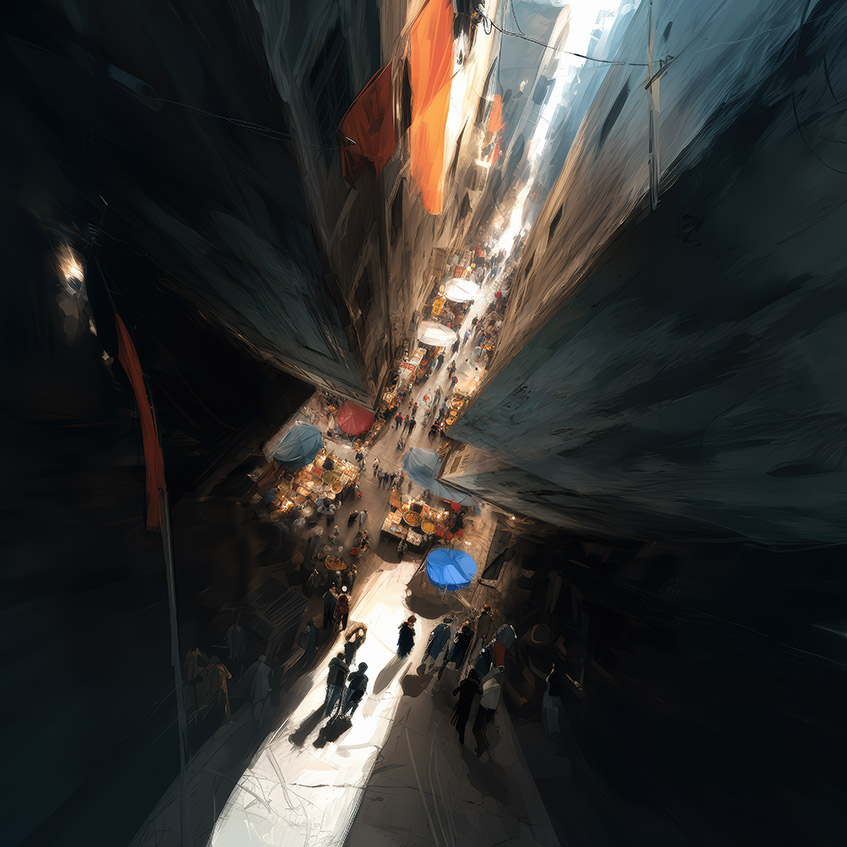
“I think full immersion in a different culture can be even richer for a visually impaired person, because everything is different. The cobblestones on the street feel different. The way it smells is different. The lighting, the way it’s diffused, is different. The languages you hear in the background are different. I think it’s a very, very rich experience.”
This image shows a narrow city street viewed from above, as if the viewer is looking down into a canyon of buildings. The sides of the street are dark and steep, with tall structures rising on both sides and closing in around the center. Light pours down from above in long, soft streaks, creating areas of brightness along the street below. Small figures move through the scene, and a few colored umbrellas or circular shapes appear among them, including a bright blue one near the lower center.
The image feels blurred, layered, and sensory rather than sharply detailed. The buildings, people, light, and movement seem to blend together, creating the feeling of being inside a place rather than simply looking at it from a distance. The composition pulls the viewer downward and inward, into the street itself, where sound, smell, texture, light, and motion all seem to exist at once.
The piece reflects Sophia’s idea that travel and cultural immersion can be especially rich for a visually impaired person. The image is not focused on a postcard-perfect view of a city. Instead, it suggests the full experience of being there: the feel of the street, the movement of people, the shifting light, the density of the buildings, and the atmosphere of an unfamiliar place. It connects to the idea that a place is not only seen, but experienced in so many ways.
ABOUT SOPHIA
SOPHIA DUNN-WALKER / CONE DYSTROPHY
Filmmaker / Producer / Actor
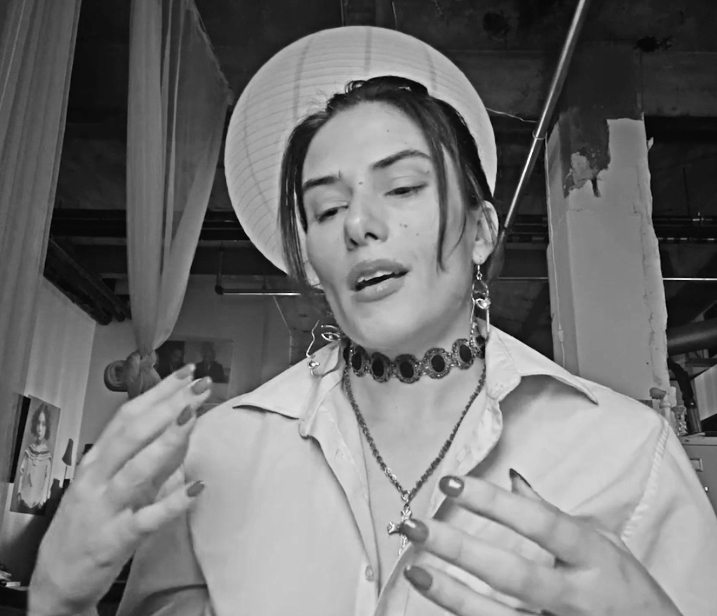
Sophia Dunn-Walker is a French-American filmmaker, producer, and actor whose work is shaped by a bold artistic voice and a deeply personal relationship to vision loss. Living with cone dystrophy, she has described disability not as a limitation, but as a lens that has sharpened her creative instincts and pushed her toward more expressive, emotionally charged storytelling. She co-runs Enkidu Productions, a company founded with her brother to support artists with disabilities and create work rooted in honesty, community, and creative risk. In the Blind Canvas Project, Sophia brings a perspective that is fearless, thoughtful, and deeply committed to expanding how we understand art, identity, and perception.
ARTISTS